This month, the Ice Age Trail Alliance is hosting the Mammoth Hike Challenge, a 46-mile…
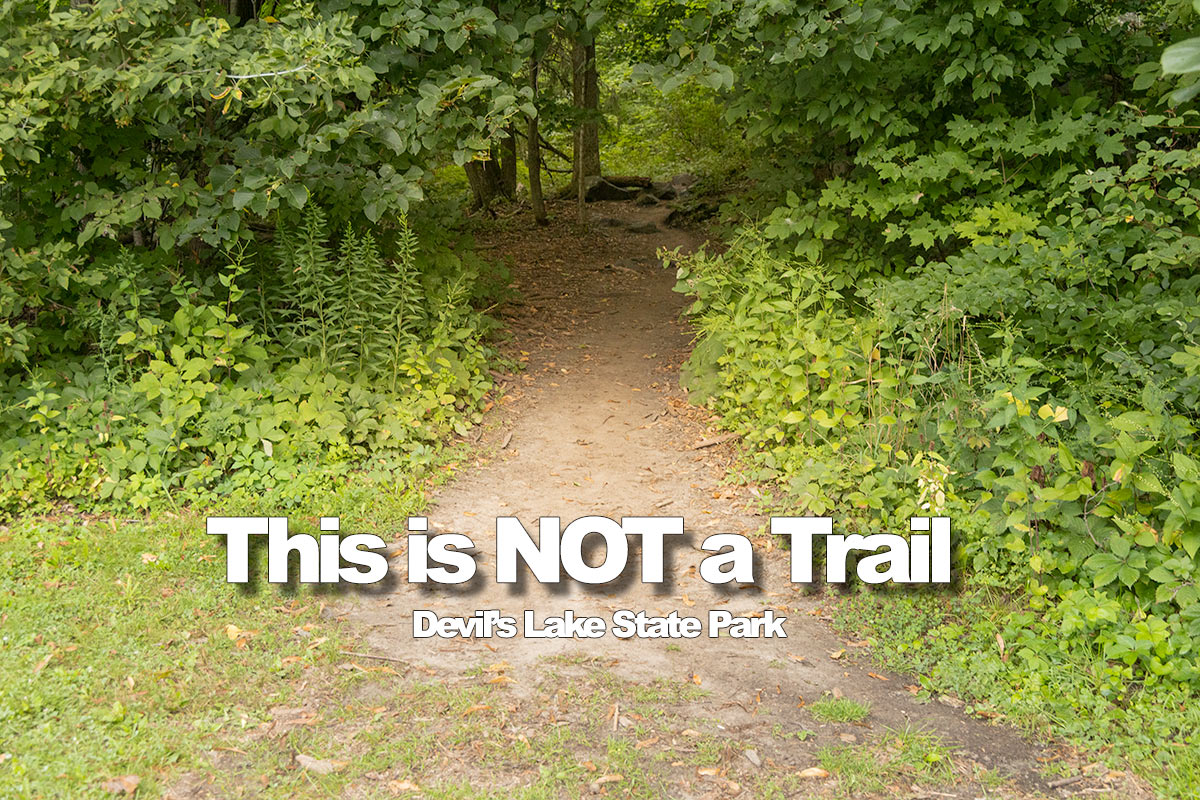
This is not a trail. It started years ago on the bluffs at Devil’s Lake State Park, when someone decided that rather than walking down to the trailhead about 50 yards away, they could cut through the forest to get to the parking lot or up to the East Bluff Trail faster. (See video, join discussion on our Facebook)
How a Bootleg Trail Forms
The first few folks just crushed a few plants, maybe broke a branch here or there, but that was enough not only to be seen, but to encourage more folks to do it. In time, the ground gets harder, everything around it dies, and the trail widens. Vegetation can no longer grow on the compressed soil.
Over time, invasive plants begin to appear nearby, their seeds carried in on the feet of anyone who uses this new “trail.” The environment degrades, wildlife is impacted, erosion damage becomes more apparent, and on and on.
But what’s worse is when it’s not just one “bootleg trail,” but 50 or 100 or more, as we see all over the bluffs at Devil’s Lake State Park.
How Parks Deal With Damage Like This
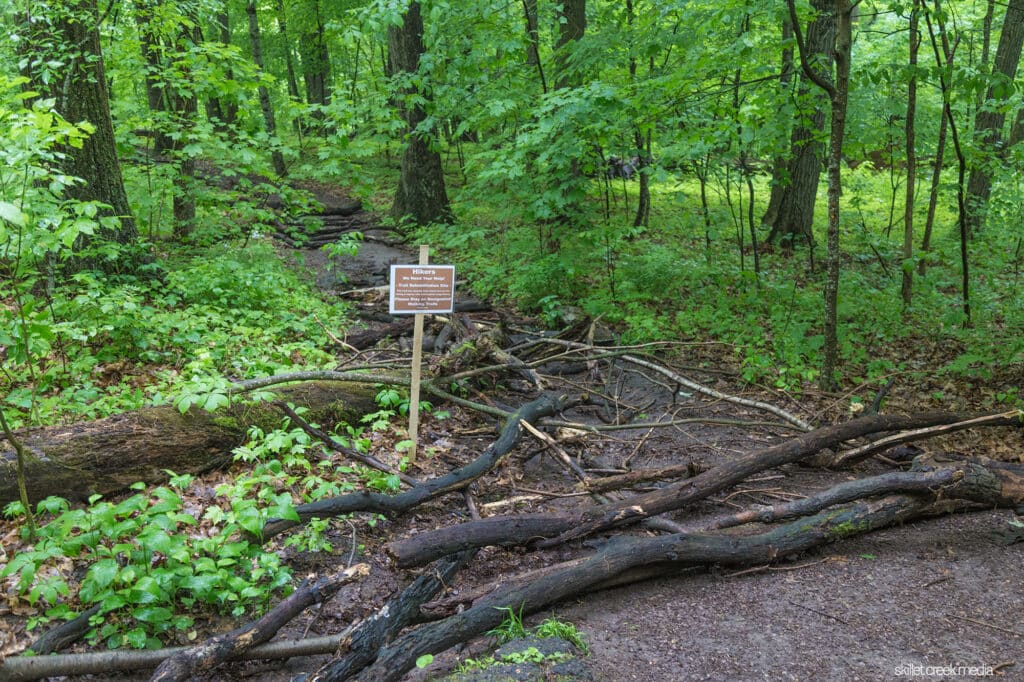
Parks across the country have solid methods to deal with this sort of damage, and it doesn’t require money, just hands. Often they just block the trails with fallen wood. Given time, nature will recover.
More info: Guidance for Managing Informal Trails
But blocking the trails may not be enough. Some people, in their desperate need to save a few steps, just go over or around.
So education is also important. Visitors need to know why we ask them to walk around. Signs must be placed at the start and end of these trails to tell folks why the piles of wood are there. “Restoration in Progress.” “Trail Closed – To Protect Sensitive Habitats and Prevent Soil Erosion.” “Please Stay on Trail – Habitat Restoration.” We’ve all seen them elsewhere. Sometimes rope, tape, or other barriers can help as well.
And of course, there must be enforcement: the willingness of the DNR to cite folks who refuse to respect the park.
Doing Our Bit
We began work on the very trail in the photo above, 10 years ago now, in 2016. My son and I worked to gather wood and close off both ends of the trail. Then, not long afterward, a group of volunteers from the park’s nature center spent a morning building on the work we had done and expanding the restoration work.
So what happened?
Well, no one followed up.
The Solution?
And that’s the next point: consistency over time. This is exactly the kind of job a Friends group exists for. Not one big project, not live music or entertainment, not endless fundraising, but steady, unglamorous work spread across years. A few days here, a few days there, closing off new volunteer trails and making sure old closures hold long enough for the land to actually heal. (If you do the work, the donations will come…)
We can’t rely on guerrilla maintenance by a few caring individuals or occasional workdays from outside organizations, and the DNR staff are already stretched too thin to keep up with something like this today. A permanent volunteer group inside the park is the one positioned to do it. When they do, things change.
Ten years ago, we hoped that we were starting on a path toward something better, but no one picked up the baton. And here we are, back where we started.
More Reading
- Guidance for Managing Informal Trails, Jeff Marion, USGS Research Scientist
- Research and Management of Informal (Visitor-Created) Trails in Protected Areas (USGS)
- Social Trails… Not for Socializing – National Park Service
- Damaged Trails – Leave No Trace

For over 30 years, the Skillet Creek blog has focused on 3 main goals: to inspire you to visit and explore the Devil’s Lake region, to help you get the most out of your visit by sharing tips, events, and other helpful information. Lastly, to advocate for our environment & wildlife and talk about how we can keep our natural areas amazing now and into the future! That last goal can sometimes cause controversy, but it’s the only way we can accomplish the first two. – Derrick Mayoleth, Owner.
Related Posts