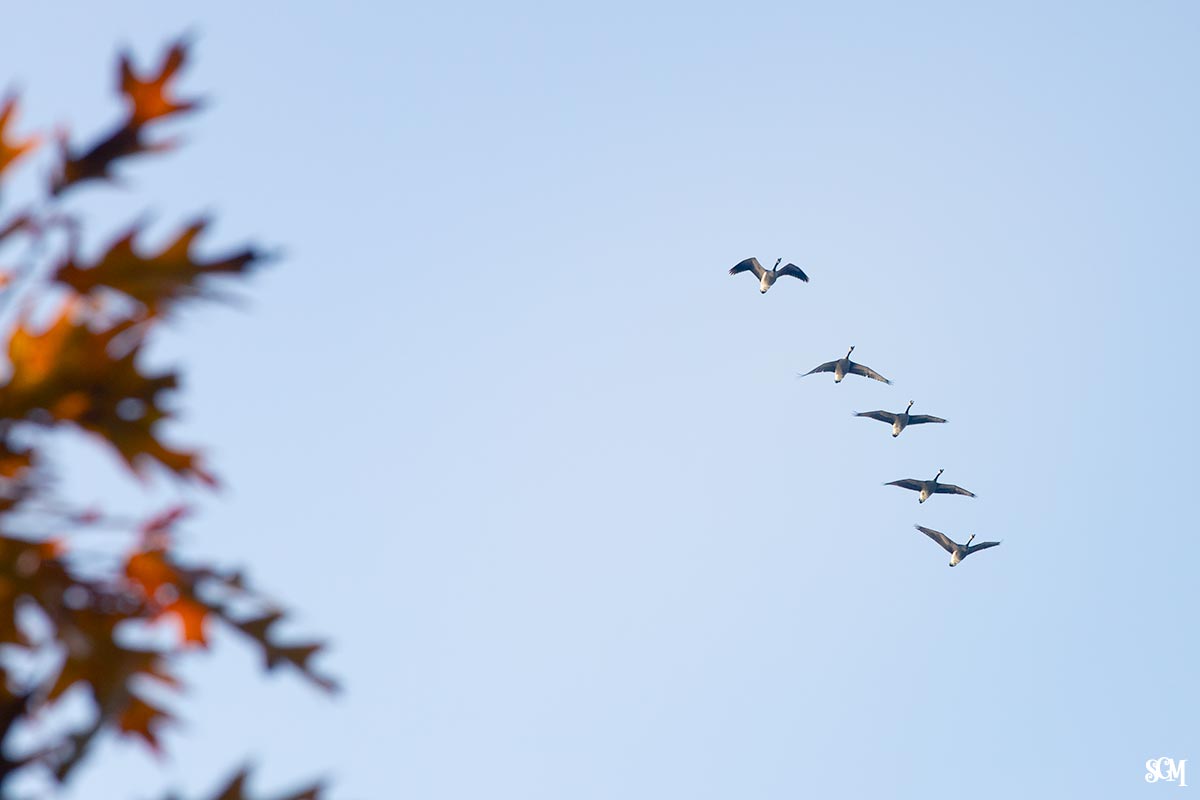
Overview: It’s that time of year when the fall color predictions start coming in, and…
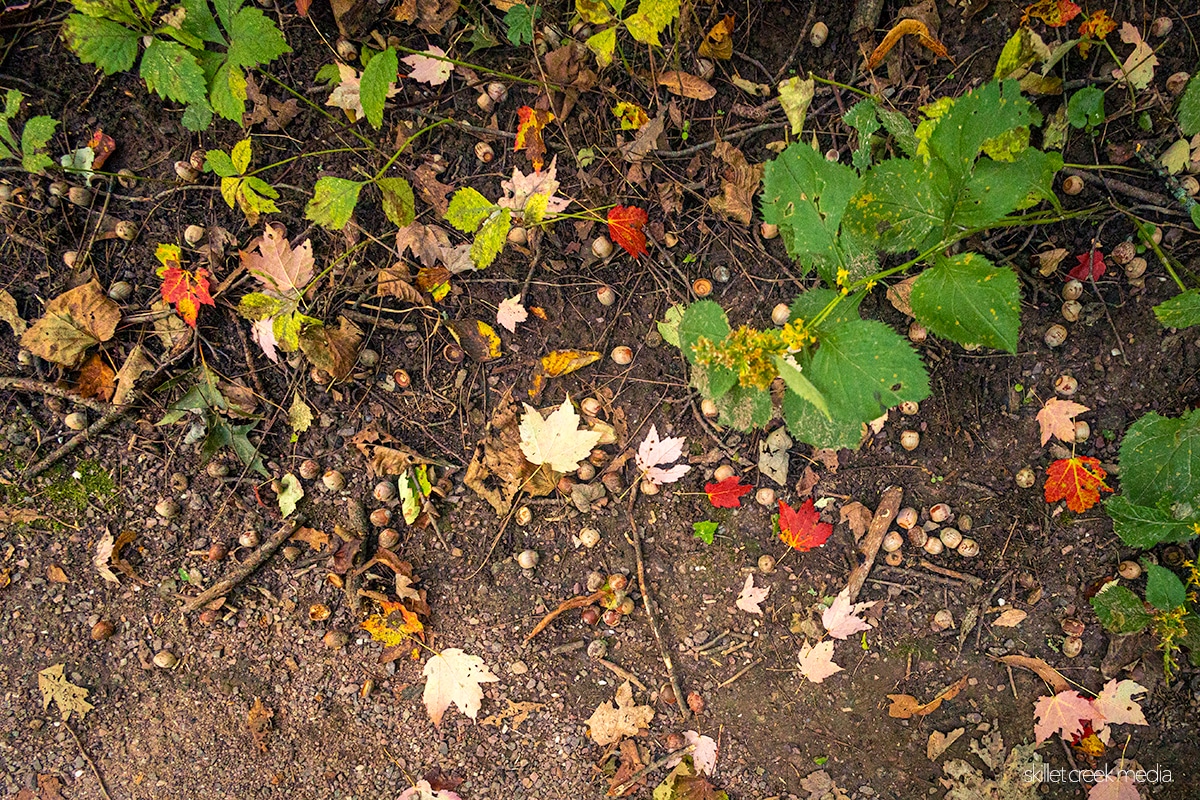
Overview: There are a lot of acorns falling around Devil’s Lake and the Baraboo Hills this autumn. Folklore says a bumper crop predicts a hard winter. The science is much more interesting. Oaks periodically produce enormous crops of acorns in events called mast years, sometimes coordinating across surprisingly large areas. Exactly how they pull that off is still something researchers are working to understand.
If you’ve been walking around Devil’s Lake lately, you’ve probably noticed the acorns. There are a ton of them this year. They’re covering sections of trail, bouncing through the woods and, depending on where you park, occasionally dropping on your car.
And whenever we get a year like this, the old story comes out: lots of acorns means we’re in for a long, hard winter.
It’s a story we’ve all heard, but as awesome as oak trees are, they don’t predict the weather.
What they’re doing is actually much cooler.
It’s Called Masting
Masting is when trees produce an unusually large crop of seeds or nuts. Oaks are one of the best-known mast species, but beeches, hickories, and other trees do it too. Some years they produce relatively little. Then, every few years, huge numbers of trees produce heavily at about the same time.
That’s where this gets particularly interesting.
How Do Trees Coordinate?
We know weather is part of the story. Temperature, moisture, spring flowering conditions, and pollination can all influence how many seeds eventually develop. Trees also have limited resources, so producing an enormous seed crop can require a period of rebuilding before they do it again.
But those things don’t completely answer the question of how hundreds of individual trees manage to synchronize their reproductive cycles.
Scientists have been studying that question for decades. Weather provides a common cue because trees across an area experience similar conditions. Pollination may help reinforce the synchronization as well. But there still isn’t one simple mechanism that explains every mast event in every species.
In other words, we understand quite a bit about masting, but the trees haven’t given up all their secrets.
Why Make So Many Acorns?
This part is easier to understand.
Imagine you’re an oak tree trying to produce another oak tree in a forest filled with squirrels, mice, chipmunks, deer, turkeys, blue jays, and all sorts of other animals perfectly happy to eat your seeds.
One strategy is simply to produce more than they can possibly eat.
During a poor acorn year, animals may find and consume a large percentage of the available crop. During a mast year, however, there can suddenly be millions of additional acorns on the landscape. Animals just can’t eat them all.
Ecologists call this predator satiation, and it is one of the leading explanations for why mast seeding evolved. By coordinating a huge crop, trees can overwhelm their seed predators and increase the percentage of seeds that escape long enough to germinate.
The lean years between large crops may help the strategy as well. If seed-eating animal populations can’t remain extraordinarily high when food becomes scarce again, there may be fewer mouths waiting when the next major mast arrives.
So, About That Winter…
Unfortunately, none of this tells us whether January will bring three feet of snow or a string of 40-degree afternoons.
It makes sense that acorns falling today are influenced by the trees’ reproductive cycles and conditions they’ve already experienced rather than by weather several months into the future.
So the old prediction about lots of acorns and a hard winter probably belongs with the woolly bear caterpillar story, fun, but not true.
But I think the real story is better anyway.
All around Devil’s Lake right now, individual oak trees are participating in a reproductive event that may involve hundreds or even thousands of other trees across the region. They’re producing enough food to influence wildlife populations, overwhelming the animals that feed on their seeds and increasing the odds that at least a few of today’s acorns become tomorrow’s oak trees.
Scientists are still trying to fully understand how the trees coordinate it.
And really, that’s pretty cool even if it doesn’t predict the weather.
Heck, even the Farmer’s Almanac struggles to do that.
References
Trees Synchronize Their Masting And We Don’t Really Know How
IFLScience, James Felton, November 8, 2023.
Mast Seeding in Perennial Plants: Why, How, Where?
Dave Kelly and Victoria L. Sork, Annual Review of Ecology and Systematics, 2002. This major review examined 570 masting datasets and remains a useful foundation for understanding the ecology and evolution of mast seeding.

For over 30 years, the Skillet Creek blog has focused on 3 main goals: to inspire you to visit and explore the Devil’s Lake region, to help you get the most out of your visit by sharing tips, events, and other helpful information. Lastly, to advocate for our environment & wildlife and talk about how we can keep our natural areas amazing now and into the future! That last goal can sometimes cause controversy, but it’s the only way we can accomplish the first two. – Derrick Mayoleth, Owner.
Related Posts