We’re looking ahead (through the rain) at a couple of big events coming up at…

Over the past few decades, many park systems and outdoor educators have observed a gradual shift in the types of programs that draw the largest audiences.
Historically, presentations on things such as geology, natural history, and focused programs exploring specific species or places were common offerings. In many locations, these programs were well attended and treated as a central part of how visitors came to understand the landscapes they were exploring.
Over time, participation in these learning-focused programs has declined in many areas, and they are now offered less frequently than they once were. While this trend is not universal, it’s certainly easy to see.
At the same time, experience-based programming has become more prominent in many places. Candlelight hikes, festivals, live music events, and other social or atmospheric gatherings often attract broad participation. These programs create shared experiences and community connection, and their popularity is not inherently a problem.

What is worth examining is how this shift affects the role of education in outdoor spaces.
Parks today operate within real financial constraints. Attendance, visibility, and funding often influence which programs are prioritized. Experience-based events tend to produce measurable participation, while educational programs, especially those that require sustained attention or prior interest, can be harder to support consistently.
Winter attendance is frequently cited as a challenge for educational programming. Cold weather and access to proper clothing do present real barriers for some families. At the same time, modern cold-weather gear is generally more effective and accessible than in past decades, suggesting that weather alone does not fully explain participation patterns.
Research and surveys increasingly suggest that many children today spend less unstructured time outdoors than previous generations. This reduced exposure can shape comfort levels, familiarity, and confidence in natural settings over time. These influences extend into adulthood, and not only visitors, but also the educators, planners, and community leaders involved in programming decisions.
When nature feels less familiar, experience-based events may feel more approachable than learning-focused programs. Educational offerings can appear optional or intimidating, even though they play an important role in building understanding, stewardship, and long-term support for conservation.
These changes are sometimes interpreted as declining interest or reduced concern for the outdoors. In some cases, structural shifts, such as reductions in dedicated naturalist staffing, reinforce that perception. Taken together, however, these patterns are more accurately understood as part of a broader cultural change in how people engage with natural places.
The larger concern is not whether people continue to visit parks. Visitation remains strong in many areas.
The concern is what happens when experience becomes increasingly disconnected from understanding.
Environmental education is widely recognized as a core component of conservation and stewardship. Without it, cumulative impacts build over time. Trail widening, habitat degradation, wildlife stress and displacement, and shifts in funding priorities rarely happen all at once, but instead develop gradually and often go unnoticed until they are difficult to reverse.

People continue to enjoy natural spaces through hiking, biking, rock climbing, and other uses. Without shared knowledge and context, that use increasingly leads to cumulative damage rather than long-term care.
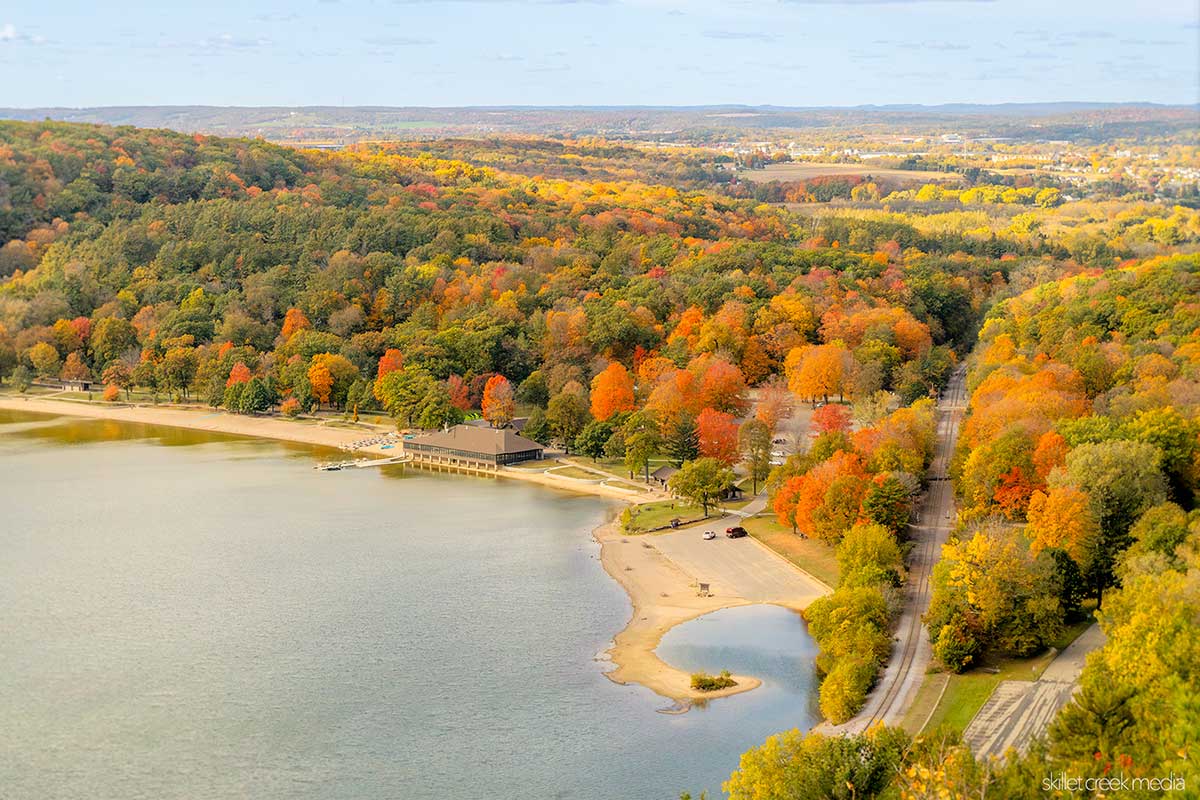
Understanding how outdoor programming has changed, and what those changes may mean for the future of places like Devil’s Lake State Park, remains an important conversation for anyone interested in conservation, recreation, and long-term stewardship.

For over 30 years, the Skillet Creek blog has focused on 3 main goals: to inspire you to visit and explore the Devil’s Lake region, to help you get the most out of your visit by sharing tips, events, and other helpful information. Lastly, to advocate for our environment & wildlife and talk about how we can keep our natural areas amazing now and into the future! That last goal can sometimes cause controversy, but it’s the only way we can accomplish the first two. – Derrick Mayoleth, Owner.
Related Posts